How to Avoid and Correct PSA Birth Record Mistakes
A person finds out their birth certificate has an error at the worst possible time. The passport application is already submitted. The job offer is waiting. The school enrollment deadline is tomorrow. Then the rejection comes. The name does not match. The birthdate is wrong. A parent’s surname is misspelled. Everything stops.
This happens to thousands of Filipinos every year. The frustration is real. The panic is understandable. But here is what most people do not know. The problem is fixable. And in most cases, it does not require a lawyer or a court hearing.
Philippine law gives ordinary citizens a way to correct birth record mistakes without going to court. Republic Act 9048 and Republic Act 10172 allow Local Civil Registrars to fix clerical errors, misspelled names, wrong birth dates, and even sex entry mistakes through an administrative process. The cost is low. The steps are clear. The only requirement is knowing which error you have and which process applies.
Why Birth Record Errors Happen in the First Place
People often blame the PSA when they find a mistake on their birth certificate. But the truth is, most errors start long before the PSA gets involved. They begin at the moment of registration, sometimes decades ago.
The Problem with Handwritten Forms
For many years, birth registrations were written by hand. Hospital staff filled out forms quickly. Midwives recorded information in crowded delivery rooms. Clerks at the LCR wrote down what they heard or thought they read. In that environment, mistakes were almost guaranteed.
A name gets spelled the way it sounds. The family says Reyes, but the clerk writes Rayes. A digit in the birthdate gets flipped. The 15th becomes the 51st. A middle name gets left out because nobody thought to ask for it. These small errors sit in the registry for years, sometimes decades, before anyone notices.
Then came digitization. When the PSA and LCR offices scanned those old handwritten records into electronic databases, a whole new category of errors appeared. A faded cursive letter got misread. A handwritten number one looked like a seven. The person doing the data entry had to guess. Sometimes the guess was wrong.
Family Confusion and Double Filings
Here is something that happens more often than people realize. A baby is born. The father goes to the LCR and registers the birth. Meanwhile, the grandmother goes to a different LCR and registers the same birth because she did not know the father had already done it. Two registrations go through. Now the PSA database shows two entries for the same person.
Neither registration is wrong by itself. But together, they create a duplicate record that causes verification problems forever. The person applying for a passport years later has no idea why the system shows two birth certificates. They just know their application got rejected.
Hospitals Filing Without Telling the Family
Many hospitals register births automatically as part of their discharge process. It is routine for them. They send the registration form to the LCR without the family even knowing.
Then the family, thinking nothing has been filed, goes to the LCR and submits their own registration. Two filings. Two entries. One person. Nobody did anything wrong. The hospital was following the procedure. The family was being responsible. But the result is a duplicate record that will cause problems for decades.
Late Registrations Rely on Memory
For people born in rural areas or in earlier decades, birth registration sometimes happened years after the actual birth. A child was born at home. No hospital records were created. The family waited until someone had time to go to the municipal hall.
By the time registration happened, memories had faded. The exact birthdate was not certain anymore. The spelling of a grandparent’s name was forgotten. The place of birth was remembered as a general area, not a specific barangay or municipality. All these approximations went into the registration record and stayed there.
Simple Human Error at Encoding
Sometimes the error is just a typo. An encoding staff typed an E instead of an A. A digit got transposed from 15 to 51. A double letter got collapsed into a single one. The staff member was tired. The handwriting was unclear. The mistake was honest. But it created a lasting problem for the person whose name got misspelled.
How to Check Your PSA Birth Certificate for Errors
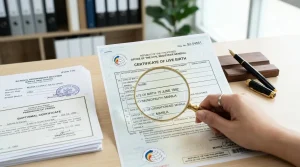
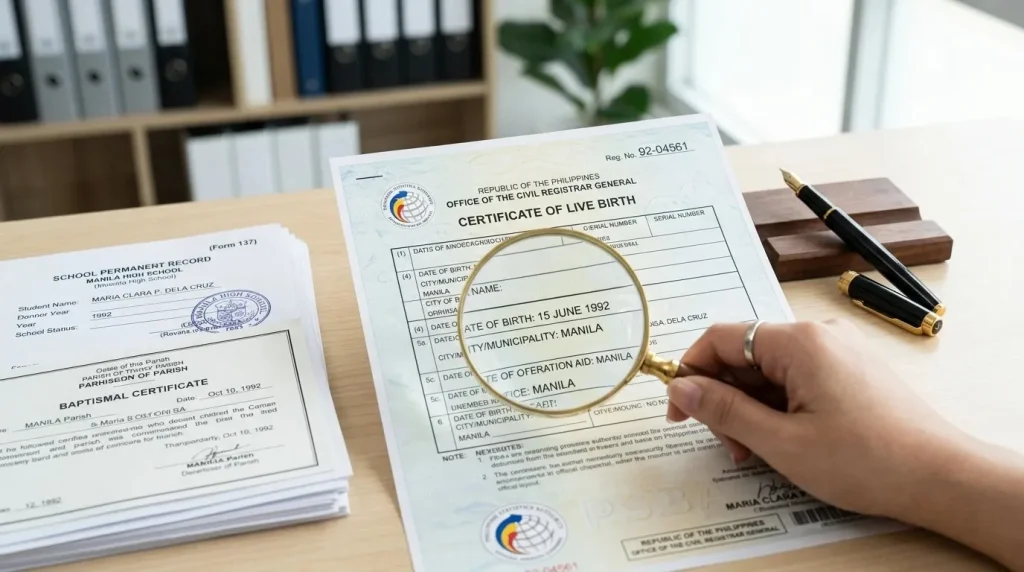
Do not wait until you need the document to look at it closely. Request a certified copy from the PSA when you have no urgent transaction pending. Then sit down and compare it with your other documents.
Here is what to look for.
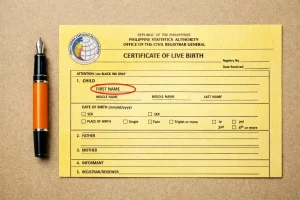
Your full name.
Compare the spelling against your school records, your passport, your driver’s license, and your voter’s ID. Look at every single letter. A missing letter in your middle name counts as an error.
Your birth date:
Check the day, month, and year against your hospital records or your family record book. If you do not have those, check against your earliest school record.
Your place of birth:
Does it match what you know about where you were born? The municipality should be correct. The province should be correct.
Your father’s name:
Spell it against his PSA certificate if you have access to it. If not, check against your parents’ marriage certificate.
Your mother’s maiden name:
Compare it with her birth certificate or marriage certificate. Her maiden name should be exactly as it appears on her own PSA record.
The registration date:
Is it consistent with when you were born? A registration that happened years after birth is a red flag for possible errors.
If you find any discrepancy, do not ignore it. Small mismatches become big problems later. A passport officer will reject an application if the birth certificate spelling does not match the application form, even if the difference is just one letter.
When to Visit the LCR
If you suspect an error, go to the Local Civil Registrar of your birthplace. Ask to see the original registry entry. Compare it with your PSA copy.
Sometimes the PSA copy is wrong, but the original LCR entry is correct. That means the error happened during digitization, not during registration. That is good news. It is usually easier to fix because the original record already has the right information.
If the original LCR entry is wrong, too, then you need to file a correction petition. The error exists in the source document, not just in the digital copy.
The Documents You Need for a Correction Petition
Putting together a strong document package is the most important part of the process. The civil registrar cannot approve your petition without evidence. You have to prove what the correct information should be.
Primary Documents
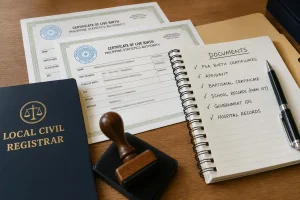
The following documents are required to support your correction petition. Each one serves a specific purpose in proving the correct information.
- Certified PSA copy of the birth certificate showing the error. You cannot file without this.
- The earliest school record, such as Form 137 or elementary enrollment. It shows your name and birthdate from a time close to your birth.
- Baptismal certificate issued within days or weeks of birth. If it has the correct spelling and your PSA copy does not, that is strong evidence.
- Parents’ marriage certificate if the error involves your surname or your parents’ names.
- Government-issued IDs, such as a passport, driver’s license, or voter’s ID, carrying the correct information.
Additional Documents That Strengthen Your Petition
Sometimes the primary documents are not enough. Adding these can make the difference.
Your voter’s registration record. Your SSS or PhilHealth records. Employment records or your professional license. Medical records from the hospital where you were born. An affidavit from a parent or relative who has direct knowledge of the correct information.
The Affidavit of Discrepancy
This is a notarized statement where you explain the error in your own words. Tell the civil registrar how you think the error happened. State what the correct information should be. Declare that you are the same person named in the certificate. Declare that you are not trying to commit fraud or hide anything.
Keep the affidavit simple and honest. Do not overexplain. Just tell the facts as you know them. A one-page affidavit is usually enough.
The Golden Rule That Cannot Be Broken
Every single document you submit must be a certified true copy. Plain photocopies will be rejected immediately. No exceptions. This is the number one reason petitions get returned.
Plan ahead. Request certified copies from your school, your church, the hospital, and other institutions weeks before you plan to file at the LCR. These requests take time. Do not wait until the last minute.
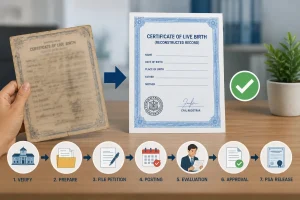
Step-by-Step Guide to Filing Your Correction Petition
Follow these steps in order. Skipping steps or doing them out of order will cause delays.
Step 1. Get your PSA copy.
Request a certified copy of your birth certificate from the PSA. Make sure it is the most recent version. Check the date on the document. Old copies might not reflect recent updates.
Step 2. Visit the LCR of your birthplace.
Go to the office where your birth was originally registered. This is important. Do not go to the LCR where you currently live. They cannot help you. They do not have the original registry book. The petition must be filed at the birthplace LCR.
Step 3. Ask for verification.
Request to see the original registry entry. Ask the civil registrar to compare it with your PSA copy. Confirm whether the error exists in the original or was introduced during digitization. Get this verification in writing if possible.
Step 4. Gather your supporting documents.
Collect certified true copies from your school, church, and other institutions. Get your affidavit notarized. Make sure every document is properly authenticated.
Step 5. Fill out the petition form.
The LCR will give you the official form. Fill out every section. Do not leave anything blank. If a section does not apply, write N/A. Sign where you are supposed to sign. List every document you are attaching. Double-check everything before you submit.
Step 6. Submit and pay.
Hand in your petition and all attachments. Pay the filing fee. Fees vary by municipality but usually range from three hundred to one thousand pesos. Get your official receipt. Keep it in a safe place.
Step 7. Wait for the public posting.
The LCR will post a notice of your petition for ten consecutive days. This is required by law. The notice is placed in a visible location at the LCR office. Anyone who objects to your correction can come forward during this period. This step cannot be skipped or shortened.
Step 8. Wait for the evaluation.
The civil registrar will review your documents after the posting period ends. This takes several weeks. If something is missing or unclear, the registrar will ask you for additional information. Respond as quickly as you can.
Step 9. Get the decision.
The civil registrar issues a formal decision. If approved, the decision authorizes the correction. If denied, the decision will explain why. You may need to add more evidence or pursue a different legal remedy.
Step 10. Wait for PSA activation.
The LCR sends the corrected record to the PSA. The PSA updates its central database. This takes several months. Once activated, you can order a new certified copy. The new copy will show the corrected information.
The Most Common Errors People Find on Their PSA Birth Certificates
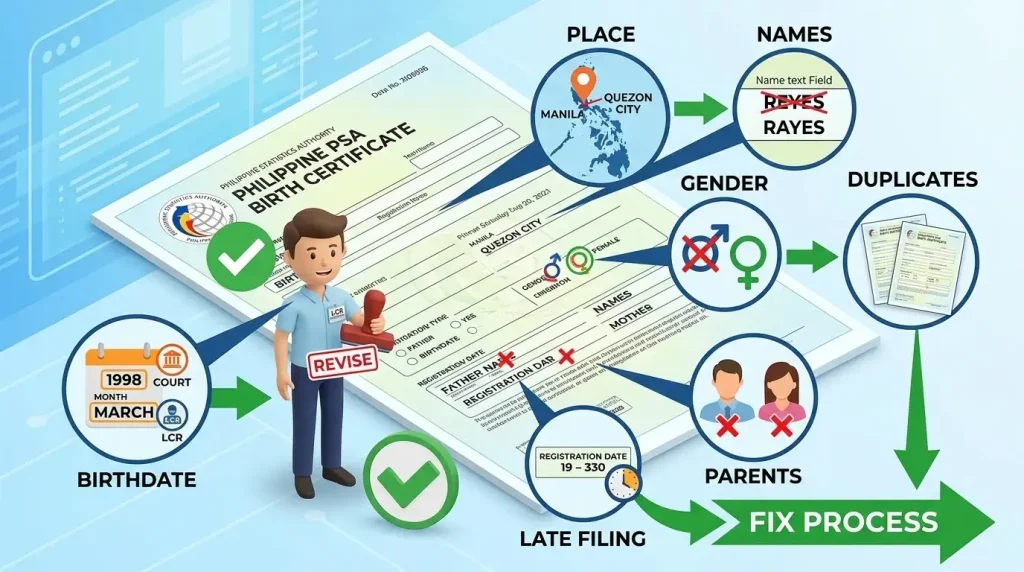
Different errors need different solutions. Knowing which category your error falls into saves time and frustration.
Misspelled names:
This is the number one complaint. A letter is missing. An extra character was added. A completely wrong name was entered. Simple spelling mistakes can be fixed at the LCR. A completely wrong name might need a court.
Wrong birth date:
If the day or month is wrong, the LCR can fix it under RA 10172. But if the year is wrong, that is a different story. Changing the year of birth requires a court order because it affects legal age, voting rights, and retirement benefits.
Place of birth errors:
Sometimes the recorded municipality is wrong. The hospital was in Quezon City, but the registration says Manila. These can be corrected with strong evidence, like hospital records or a sworn statement from the attending physician.
Parent name mistakes:
A father’s name was spelt wrong. A mother’s maiden name is missing a letter. These are usually fixable through the LCR because they are clerical errors. For more complex cases involving family names, see our resource on how to fix PSA duplicate and surname errors.
Sex entry errors:
A clerical mistake where a male was recorded as female or vice versa. RA 10172 covers this. The LCR can fix it with medical evidence.
Duplicate records:
Two birth certificates exist for the same person. One needs to be cancelled. This is done through a Petition for Cancellation of Duplicate Entry.
The Laws That Make Corrections Possible
Before 2001, fixing even the smallest typo on a birth certificate meant going to court. People had to hire lawyers. Cases took years. It was a nightmare for something as simple as a missing letter.
Then, Republic Act 9048 changed everything.
What RA 9048 Does
This law gave Local Civil Registrars the power to correct clerical and typographical errors without a court order. The LCR can fix misspelled names, change nicknames to legal names, and correct other harmless mistakes. The process is administrative. You deal with the LCR directly, not a judge.
The law defines a clerical error as a mistake that is visible on the document and came from a mechanical or human error in writing or typing. In plain language, it is a typo that everyone agrees is a typo. No one disputes what the correct information should be. The document just has a mistake.
What RA 10172 Adds
In 2012, Republic Act 10172 expanded the law to cover corrections to the day and month of birth and corrections to sex entries. Before this, those errors also required court action. Now they can be done at the LCR with the right supporting documents.
These laws only apply to readable errors. If your document is blurred or unreadable, you need a different process. Learn how in this guide on how to fix a blurred PSA birth certificate.
When You Still Need a Court
Some errors are too big for the LCR to handle. You will need to go to court for these situations.
- Changing the year of birth. This is a major change that affects legal age, so only a judge can authorize it.
- Changing your surname to a completely different name. Fixing a typo is one thing. Adopting an entirely new surname is another.
- Errors involving who your parents are or whether you were legitimate. These go to the heart of filiation and require judicial determination.
If your situation falls into these categories, get a lawyer. The LCR cannot help you, and trying to force an administrative petition will just waste time.
Special Cases That Need Extra Attention
Changing Your First Name
RA 9048 allows first name changes under certain conditions. Your name must be ridiculous, tainted with dishonor, or extremely difficult to write or pronounce. Or the change will avoid confusion. Or you have used the new name for so long that everyone in your community knows you by it.
This is a higher standard than a simple typo correction. You need strong evidence that the new name is the one you actually use. School records, employment records, and affidavits from community members all help.
Living Overseas
If you are a Filipino living abroad, you can file your correction petition through the Philippine Embassy or Consulate in your country of residence. Not all corrections qualify, so check with the embassy first.
The process takes longer because the petition has to be sent back to the Philippine LCR for final registration. Plan for extra months. If you are in a hurry, consider authorizing a relative in the Philippines to file on your behalf using a Special Power of Attorney.
Late Registered Births
If your birth was registered years after you were born, the supporting documents might be inconsistent. The original late registration may have relied on memory rather than records. Be prepared to provide extra affidavits explaining why certain details were recorded the way they were.
Deceased Persons
Errors on a deceased person’s birth certificate can still be corrected. This is sometimes needed for estate settlement, inheritance claims, or benefit claims by survivors. An immediate family member files the petition as the authorized representative. You will need documents proving your relationship to the deceased.
How to Prevent Birth Record Errors from Happening
Fixing an error is doable. Preventing it is even better. Here is what families can do to keep birth records clean from the start.
At the Hospital
Ask to see the completed registration form before it is submitted. Do not assume the hospital staff got everything right. Check the spelling of every name. Verify the birth date. Confirm the parents’ names. If something looks wrong, speak up before the form leaves your sight.
Use Legal Names Only
Do not put nicknames on the registration form. Do not abbreviate. Write the full legal name exactly as it should appear for life. Junior is not a legal name. Use the full given name. Nicknames can cause verification problems later.
Keep a Copy
Before the form leaves your hands, take a photo or request a photocopy. You want proof of what was submitted. If an error appears on your PSA copy later, you can show that you submitted the correct information.
Follow Up Early
Within a year of the birth, request a PSA copy. Compare it with your records. If there is an error, you caught it early when correction is easiest. Do not wait until the child needs a passport for a school field trip.
Be Consistent Across Documents
Use the exact same spelling of your name on every official document. Passport. Driver’s license. Voter’s ID. Employment records. SSS records. PhilHealth records. Inconsistencies across documents create suspicion even if each document is correct on its own.
What to Do After Your Correction Is Approved
Once the PSA activates your corrected record, order a new certified copy. The new certificate will have an annotation showing that a correction was made. This annotation is standard. It does not make the certificate less valid. All government agencies accept annotated certificates.
Order three copies. Keep one for your files. Use one for your next transaction. Keep one as a backup. This saves you from having to order again every time you need a copy.
Updating Other Documents
Your corrected birth certificate is just the start. You also need to update your other government records.
Take your new PSA copy to the DFA to update your passport. Go to the LCR to update your voter registration. Visit SSS and PhilHealth to update their records. Each agency has its own process, so ask what they require.
Do not assume these updates happen automatically. They do not. You have to do each one yourself. Make a list and work through it methodically.
Mistakes That Will Ruin Your Petition
People make the same mistakes over and over. Learn from them so you do not repeat them.
Photocopies instead of certified true copies:
This is the number one reason petitions get returned. Every single document must be certified by the issuing institution. No shortcuts. No exceptions.
Inconsistent evidence:
Your school record says one spelling. Your baptismal certificate says otherwise. The civil registrar cannot approve a correction when your own evidence contradicts itself. Get affidavits to explain the differences before you file.
Wrong LCR:
Filing at the wrong office wastes weeks. The petition must go to the LCR of your birthplace. Not where you live now. Not where your parents live. The birthplace.
Incomplete forms:
Blank fields. Missing signatures. Unlisted attachments. These small errors create back and forth that drags out the timeline. Fill out everything. Sign everything. List everything.
Wrong remedy:
Trying to fix a year of birth under RA 9048 will fail. Trying to change a surname through the LCR when you need a court will fail. Know what your error is and use the right law.
Impatience. The process takes months. PSA activation alone takes several months after LCR approval. Do not expect your corrected certificate in a few weeks. Plan ahead.
Duplicate Birth Certificates and What to Do About Them
Duplicate birth certificates are different from simple typos. A typo just needs a correction. A duplicate needs a cancellation. You cannot have two active records for the same person. The system will not allow it. So one of them has to go.
How Duplicates Actually Happen
Most people think a duplicate birth certificate means someone committed fraud. That is almost never the case. Duplicates come from confusion, poor communication, and plain old administrative mistakes.
Family members acting on their own.
A baby is born. The father goes to the LCR in the city where the baby was delivered. He registers the birth. Meanwhile, the grandmother goes to a different LCR near her house. She registers the same birth because she did not know the father had already done it. Two registrations go through. Two entries exist for one person.
Hospitals filing without telling the family.
Lots of hospitals register births automatically as part of their discharge process. It is just what they do. But they do not always tell the family about this. So the family, thinking nothing has been filed, goes to the LCR and submits their own registration. Two filings. Two entries. One person. Nobody meant for this to happen. But it does.
Old digitization errors.
When physical registry books were scanned into the PSA database years ago, some pages were scanned twice. A technical glitch. A machine error. The person only ever had one original entry. But the digital database shows two. This is nobody’s fault. It is just something that happened during a massive government project decades ago.
Why One Entry Must Be Cancelled
Having two active birth certificates in the PSA database creates a permanent problem. Every time a government agency checks that person’s record, the system returns two results. The agency has no way of knowing which one is correct. So they reject the transaction. Better safe than sorry, they figure.
The solution is not to merge the two entries. The PSA cannot merge records. They do not have that capability. The solution is to cancel one entry entirely. The cancelled entry gets an annotation in the database. It no longer functions as an active record. The other entry becomes the sole official record.
Which Entry Gets Kept
The civil registrar decides which entry to keep and which to cancel. This decision is not random.
- The registrar looks at the person’s other official documents
- School records, passport, driver’s license, and government IDs are examined
- These documents usually point to one of the two entries
- That is the one to keep
If both entries are identical, the registrar may keep the earlier registration. Or they may keep the one that came from the hospital rather than a family member. The goal is to preserve the most authoritative record.
Filing a Petition for Cancellation of Duplicate Entry
This is the formal name of the legal remedy. It is an administrative petition. No court order is needed. The LCR has full authority to cancel one entry.
What you need to submit.
- Both PSA certified copies of the duplicate entries
- A notarized affidavit explaining how the duplicate happened
- Baptismal certificate
- School records
- Government-issued IDs
- A sworn statement from a parent or relative who knows about both registrations
The affidavit is especially important here. It must explain who filed each registration. When they were filed. Which entry reflects the correct information? The registrar needs this context to make a decision.
The process step by step:
Step 1. Get certified copies of both PSA birth certificates.
Step 2. Visit the LCR of your birthplace.
Step 3. Ask the civil registrar to confirm that a cancellation petition is the right remedy.
Step 4. Gather all supporting documents. Have your affidavit notarized.
Step 5. Complete the petition form. Fill out every section.
Step 6. Submit everything. Pay the filing fee. Get your receipt.
Step 7. Wait for the public notice period of ten days.
Step 8. Wait for the civil registrar’s decision.
Step 9. Once approved, wait for PSA activation. This takes several months.
Step 10. Order a new PSA certified copy to confirm that only one active record remains.
Surname Corrections and Republic Act 9255
Surname errors are sensitive. They often involve family relationships and legal parentage. Getting it wrong means filing the wrong petition and wasting months.
Simple Typographical Surname Errors
A typographical surname error is just a spelling mistake. The surname on the certificate is clearly meant to be the family name. But it is spelled wrong.
Examples of typographical errors.
- A missing letter
- A transposed character
- An extra vowel
- A double letter written as a single letter
For these errors, RA 9048 applies. The correction is filed at the LCR of the birthplace. The supporting documents must consistently show the correct spelling. A baptismal certificate, school records, and government IDs all pointing to the same spelling are usually enough.
When It Is Not Just a Typo
Some surname issues are not typos. There are legal questions about which surname the person has the right to use. These cases cannot be fixed at the LCR. They require a court petition.
Situations that need a court.
- A person born out of wedlock who wants to use the biological father’s surname
- A person who was adopted and wants to use the adoptive parents’ surname
- A person who wants to change their surname entirely, not just fix a typo
- A person whose birth certificate shows a surname that belongs to a different family
How Republic Act 9255 Works for Illegitimate Children
RA 9255 allows an illegitimate child to use the biological father’s surname. But there are conditions. The father must voluntarily acknowledge the child.
Ways a father can acknowledge a child.
- Signing the Certificate of Live Birth at the time of registration
- Executing an Affidavit of Admission of Paternity
- Signing a public document that acknowledges the child
Once the acknowledgement is filed with the LCR, the child’s birth certificate can be amended to reflect the father’s surname. This is not a typo correction. It is a substantive change. But it can be done administratively under RA 9255. A court is not required.
The process requires the father’s cooperation. If the father refuses to acknowledge the child, the mother may need to file a court case to establish paternity.
What to Do When the LCR Refuses a Surname Correction
Sometimes the LCR refuses to process a surname correction because they believe the issue is substantive rather than clerical.
What to do in this situation?
- Do not argue with the staff. Stay calm and polite.
- Ask to speak to the civil registrar directly.
- Explain your situation clearly. Show your supporting documents.
- If the civil registrar still refuses, ask for a written explanation.
The denial should state the legal basis. You can then take that denial to a lawyer. From there, you can decide whether to file a court petition or appeal the denial to the Civil Registrar General.
Dealing with Difficult LCR Offices
Not all LCR offices are the same. Some are efficient and helpful. Others are understaffed, slow, or uncooperative. Knowing how to navigate a difficult LCR office saves time and frustration.
Before You Go
Do your homework first.
- Call ahead or check the LCR’s website if they have one
- Ask about their schedule for accepting correction petitions
- Ask about the filing fee
- Ask about any additional requirements beyond what the law says
Prepare your documents completely.
- Have everything in order before you step into the office
- Do not expect the LCR staff to help you organize your papers
- Use a clear folder. Label your documents.
- Make the staff’s job as easy as possible.
When You Arrive
Be professional and patient.
- Dress appropriately
- Be polite to everyone, even if they seem rude
- LCR staff deal with frustrated people all day. Being respectful sets you apart.
Ask clarifying questions politely.
If a staff member tells you something that does not sound right, ask for clarification. Say something like, I want to make sure I understand correctly. Are you saying my petition cannot be accepted for this reason?
Sometimes the staff member is mistaken. Sometimes they give you a shortcut that the law does not actually require. Polite questions help you figure out which is which.
If Your Petition Is Rejected
Get the rejection in writing. The civil registrar is required to provide a written explanation for any denial. This written denial is your ticket to appeal.
You can appeal the denial to the Civil Registrar General at the PSA in Quezon City. The appeal process is formal. You will need to submit:
- The denial letter
- Your original petition
- All supporting documents
The Civil Registrar General will review the case and issue a binding decision.
If the LCR Loses Your Documents
It happens. Papers get misplaced. Files get buried. If the LCR loses your petition, do not panic. This is why you kept copies of everything.
What to do.
- Provide your copies to the LCR
- Ask them to acknowledge receipt in writing
- Follow up regularly after that
Do not assume they will call you when they find your file. Be present. Be polite. Be persistent.
The Role of the PSA After Correction
Many people think the correction is done once the LCR approves the petition. That is not correct. The LCR approval is only half the battle. The PSA must still update its central database.
How PSA Activation Works
The LCR transmits the approved correction to the PSA through an electronic system. The PSA receives the transmission and queues it for processing. A PSA staff member reviews the correction. If everything matches, the PSA updates the central database.
This process takes time. The PSA receives thousands of corrections from hundreds of LCRs across the country. There is a backlog.
Do not expect PSA activation to happen quickly.
- Three to six months is normal
- Sometimes it takes longer
- Plan for this delay from the beginning
How to Check if the PSA Has Activated Your Correction
The only way to know for sure is to request a new PSA certified copy.
What to look for.
- If the new copy shows the corrected information, activation is complete
- If it still shows the old error, activation has not happened yet
Do not keep ordering copies every week. That wastes money. Wait three months after your LCR approval. Then order one copy to check. If the error is still there, wait another two months and check again.
What to Do If the PSA Does Not Activate the Correction
If six months have passed since your LCR approval and the PSA still shows the error, follow up.
Step-by-step-follow-up.
- Contact the LCR first. Ask them to confirm they transmitted the correction.
- Get a copy of the transmission receipt if possible.
- Contact the PSA. Call their hotline or visit a PSA Serbilis outlet.
- Provide your LCR approval date and your reference number.
- Ask them to check the status of your correction.
If the PSA confirms they never received the transmission, the LCR must resend it. If the PSA confirms they received it, but it is stuck in processing, ask for an estimated completion date.
Working with a Lawyer
Most clerical corrections and duplicate cancellations can be done without a lawyer. The forms are standard. The procedures are published. The LCR staff are accustomed to assisting the public.
But some situations require legal help.
When You Need a Lawyer
Get a lawyer if your case involves any of these.
- Changing the year of birth
- Errors involving filiation or legitimacy
- Changing to a completely different surname
- A petition that the LCR denied, and you want to appeal
- Errors that affect multiple family members with conflicting evidence
How to Find a Lawyer
Where to look.
- The local IBP chapter can provide referrals
- Ask at the LCR if they know lawyers who handle civil registry cases
- Ask friends or family for recommendations
- Look for lawyers who specialize in civil law or family law
What to Expect to Pay
Lawyer fees vary widely. A simple court petition might cost ten thousand to thirty thousand pesos. A complex case with contested facts could cost more. Always ask for a written fee agreement before hiring anyone.
Frequently Asked Questions
Can I correct my birth certificate if I live outside the Philippines?
Yes. You can file through the Philippine Embassy or Consulate in your country of residence. You can also authorize a relative in the Philippines to file on your behalf using a Special Power of Attorney.
How many copies of my corrected certificate should I order?
Order at least three. Keep one for your files. Use one for your next transaction. Keep one as a backup. You never know when you might need an extra copy.
Will my corrected certificate look different?
Yes. It will have an annotation showing that a correction was made. This is normal. It does not affect the validity of the certificate.
Do I need to publish my correction petition in a newspaper?
No. RA 9048 only requires posting at the LCR for ten days. Newspaper publication is not required.
Can I correct my child’s birth certificate without the other parent’s consent?
It depends. If the correction is clerical and does not affect filiation, you can file alone. If the correction involves the child’s surname or parentage, the other parent’s consent or a court order may be required.
What if the error is on my parents’ birth certificate, not mine?
You can file a correction petition on behalf of a living parent with their written authorization. If the parent is deceased, you can file as an interested party with documents proving your relationship.
Conclusion:
Birth record mistakes are frustrating. They always show up at the worst possible time. Right when you need your passport renewed. Right when a job offer is waiting. Right when a school enrollment deadline is looming.
But here is the thing. These errors are fixable. The government created RA 9048 and RA 10172 specifically to help ordinary people correct these mistakes without spending a fortune on lawyers. The process is administrative. The cost is low. The steps are clear.
The process takes patience. Several months from filing to PSA activation is normal. But once it is done, the corrected record stays corrected. No more passport rejections. No more benefit claim delays. No more explaining the same error over and over to every government agency.