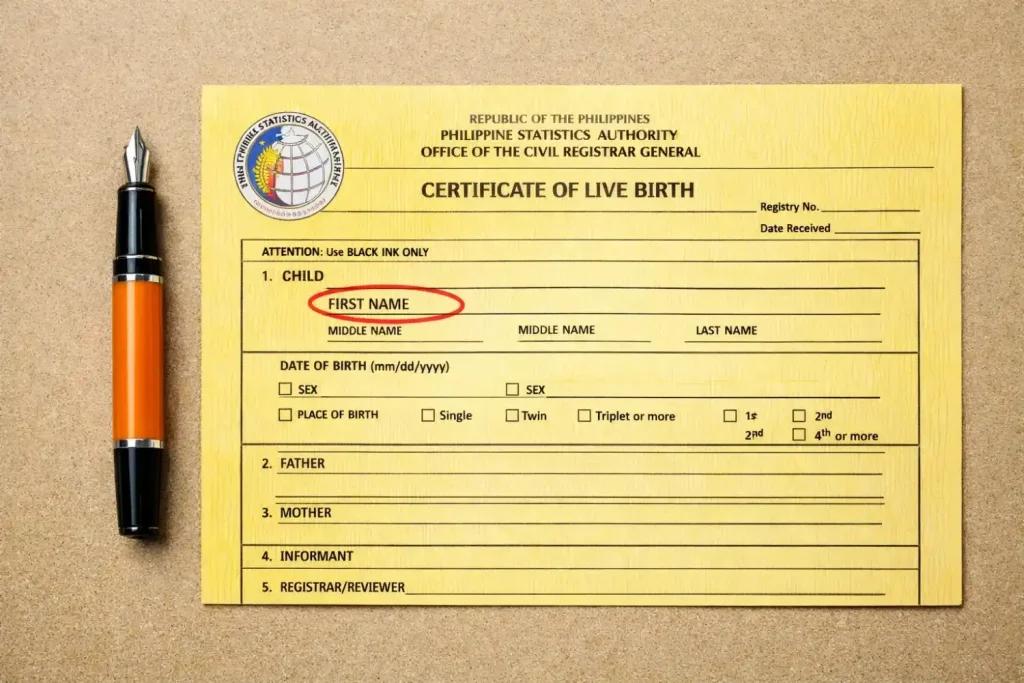
How to Correct Your First Name in Your PSA Birth Certificate: A Complete 2026 Guide
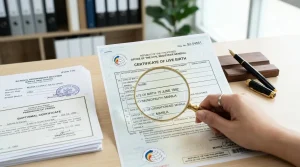
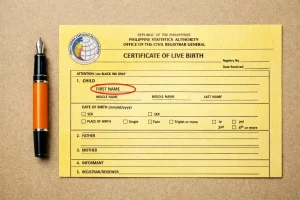
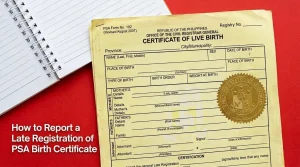
Getting your name right on your PSA birth certificate is the first step to securing your future. Whether you are applying for a passport, registering for the PRC board exams, or updating your SSS records, a single misspelled letter can stop your application in its tracks. Most people think they need a lawyer and a lot of money to fix these mistakes, but that is not always true. If your record is entirely missing, you must first undergo late registration for birth.
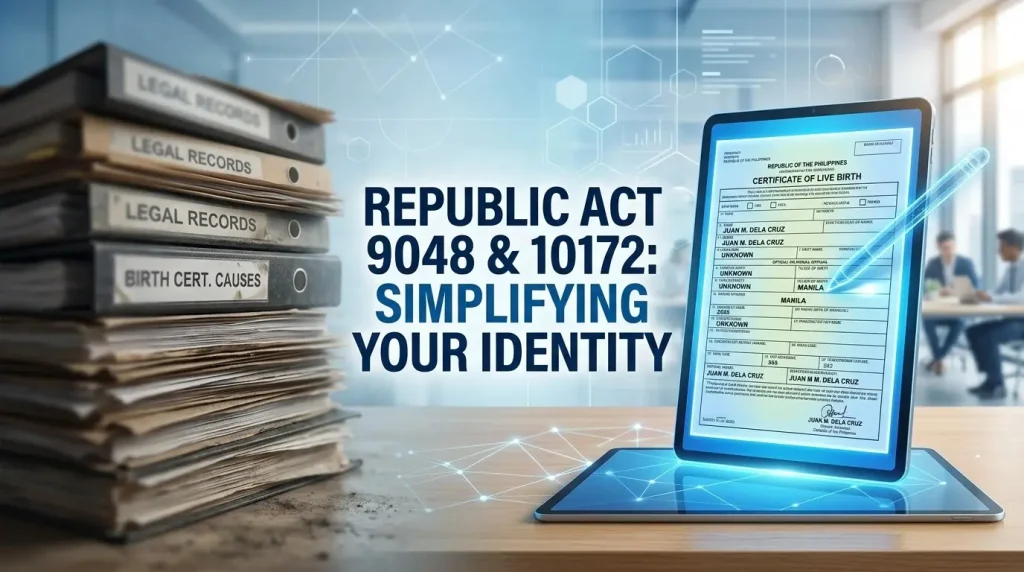
In the Philippines, two main laws, Republic Act (RA) 9048 and RA 10172, allow you to fix “clerical errors” through an administrative process. This means you can often solve the problem directly at your local city hall, without ever stepping into a courtroom. In this guide, we will break down exactly how to navigate this process in 2026, including some new, faster options you might not know about.
Is Your Error “Administrative” or “Judicial”? (The Hard Stop)
Before you spend any money, you need to know if your error can be fixed at the local office or if you actually need a judge. Not all mistakes are treated the same way by the law.
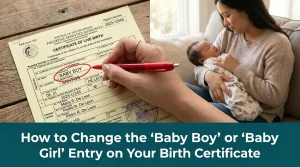
- What you CAN fix (RA 9048/10172): You can fix misspelled first names, the day or month of your birth, and your sex (gender) if it was clearly a typo. For example, if your name is “Maria” but it was typed as “Maeria,” that is a clerical error.
- The “Year of Birth”: This is a major point where most people get stuck. If your Year of Birth is wrong, you cannot fix it through a simple administrative petition. This counts as a ‘major change,’ which means you’d need to file a Rule 108 Judicial Petition with the court.
- Nationality & Status: Similarly, if you want to change your citizenship or your “legitimacy” status (like adding a father’s name later), you will almost always need a lawyer and a court order.
The “Migrant Petition”: Fixing Your Record from a Different City
One of the biggest headaches for Filipinos is living far from where they were born. If you were born in Cebu but now work in Manila, you don’t have to fly back home just to file a paper.
You can use the Migrant Petition process. This allows you to go to the Local Civil Registrar (LCR) of the city where you live right now. They will accept your documents and handle the transmittal to your birth city for you. Keep in mind that “Migrant Petitions” usually come with an extra service fee (around ₱500 to ₱1,000) to cover the shipping and handling between the two government offices.
Requirements & The “Hierarchy of Evidence”
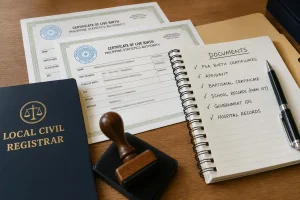
To win your petition, you need proof. The PSA won’t just take your word for it; they need documents that show what your “correct” name should be.
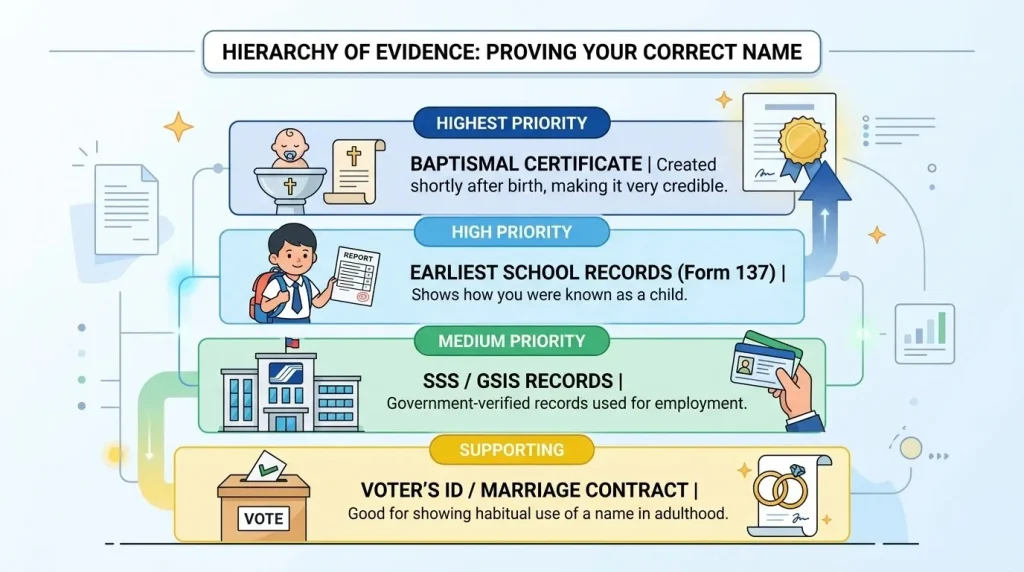
The Evidence Table: Which Documents are Strongest?
Not all IDs are treated equally. The PSA looks for the earliest possible records to prove your true identity.
| Priority | Document Type | Why it Matters |
| Highest | Baptismal Certificate | Usually created shortly after birth, making it very credible. |
| High | Earliest School Records (Form 137) | Your elementary school records show how you were known as a child. |
| Medium | SSS/GSIS Records | Government-verified records used for employment. |
| Supporting | Voter’s ID / Marriage Contract | Good for showing habitual use of a name in adulthood. |
What if your documents are inconsistent?
If there’s a mismatch between your Social Security records and your school records, an Affidavit of Discrepancy might be necessary. Essentially, this is a sworn declaration clarifying that the two names in question actually belong to the same individual.
Step-by-Step Guide (Going Through the Administrative Path)
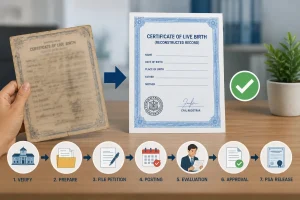
Once you’ve gathered your documents, here’s what you’ll actually do:
- File and notarize your papers: You’ll submit a notarized affidavit to the Local Civil Registry (LCR). Think of this as a sworn statement where you clearly explain what the error is and why it needs fixing.
- The 10-day public posting: The city hall will post your request on their bulletin board for 10 days in a row. This is just to give anyone a chance to speak up if they have an objection to the change.
- Publication in a newspaper (only for first name changes): If you’re changing your first name, and it’s not just a simple typo fix, you’ll have to announce your petition. This means running a notice in a local newspaper once a week for two weeks.
- LCR Decision: The local registrar will then review the publication and make a decision on your request. Typically, this process requires roughly five business days.
- PSA Affirmation: The local decision then makes its way to the Civil Registrar General (CRG) in Manila, where final approval is granted.
Premium Annotation & Faster Processing
In the past, waiting for the PSA to update your record could take 4 to 6 months. However, in 2026, many PSA outlets will now offer a Premium Annotation service.
This service uses electronic transmission to send your approved petition to the central office instantly. Instead of months, you can often see the correction reflected in the system within 10 to 15 working days. When you are at the LCR, make sure to ask specifically for the “Electronic Transmission” or “Advance Copy” option to skip the long, manual mailing wait.
2026 Updated Fees & Realistic Timeline
Though the government strives to minimize expenses, you’ll need to account for some less obvious costs:
- Filing Fees: Expect to pay ₱1,000 for minor corrections, like typos, and ₱3,000 for more significant changes, such as name alterations or sex corrections.
- Newspaper Publication: This can be the priciest aspect, with costs ranging from ₱2,000 to ₱5,000, contingent on the newspaper you choose.
- Notarial Fees: Budget approximately ₱200 to ₱500 for your affidavit.
- Documentary Stamp Tax (DST): Small fees for every official document issued.
- Reality Check: If you use the standard process, expect to wait 4 to 6 months. If you use the Premium Annotation service and follow up regularly, you could have your new certificate in under a month.
Conclusion
Correcting a PSA birth certificate can feel overwhelming, but knowing whether your error is “administrative” or “judicial” saves you time and money. By gathering your “strongest” evidence, like baptismal records and school forms, you can ensure a smooth filing process. Don’t forget to take advantage of the 2026 Premium Annotation service to get your updated documents as fast as possible. With your records squared away, you’re ready to confidently apply for your passport or license.
Frequently Asked Questions (FAQ)
Can I change my name because I just don’t like it?
No. You must prove the name is “ridiculous,” difficult to pronounce, or that you have used a different name habitually for years.
What if my petition is denied?
If the local office says no, you can appeal the decision to the PSA Main Office in Quezon City.
Can I do this online?
You can order copies of your certificate online, but the correction process itself must be started in person at the local civil registry office.